How to Plan Your Week for Maximum Productivity
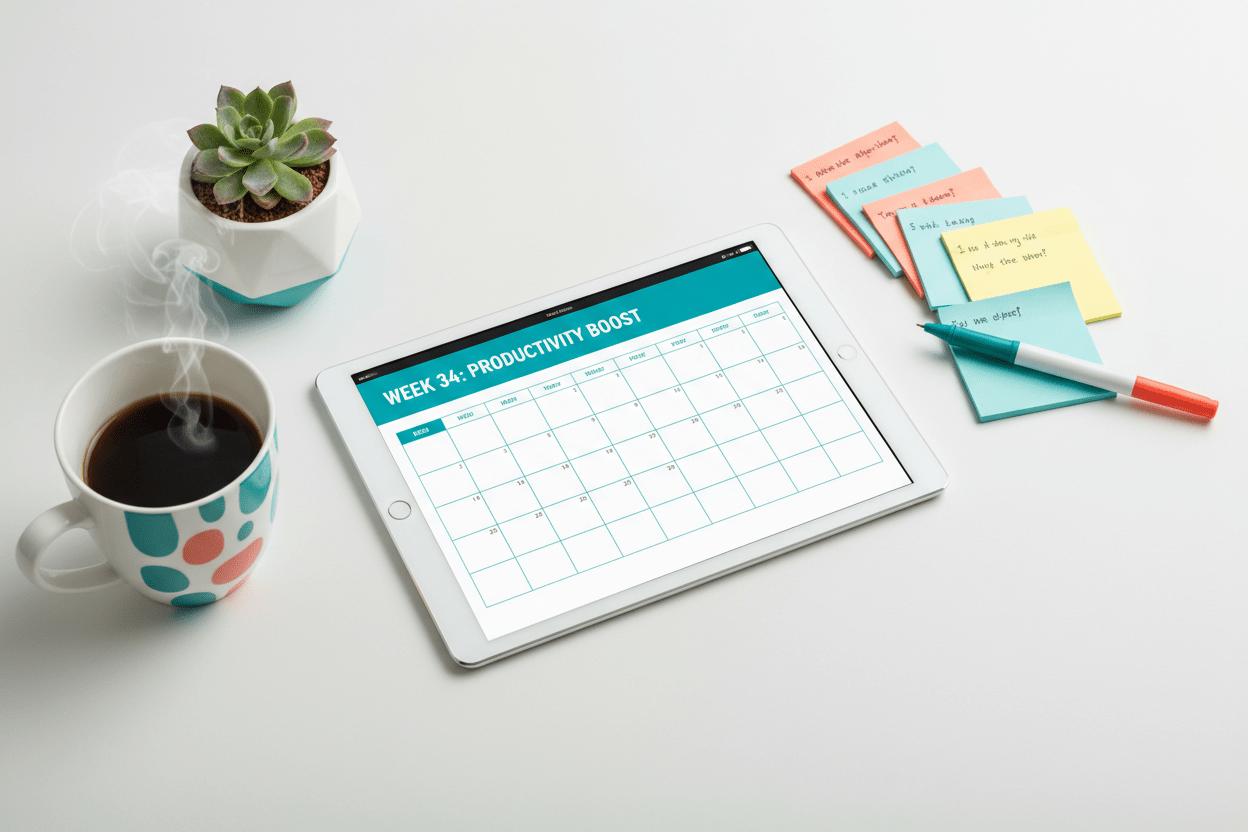
Do you ever reach Friday and wonder where the week went? You were busy — but were you productive? There's a big difference between being busy and actually making progress on what matters.
The secret to a truly productive week isn't working harder. It's planning smarter. Here's the exact weekly planning method we recommend at The E-Organizer.
Why Weekly Planning Changes Everything
Most people plan their day — but not their week. The problem with day-by-day planning is that you lose sight of the bigger picture. You react to what's urgent instead of working on what's important.
Weekly planning gives you:
- A clear view of your priorities for the next 7 days
- Time to schedule deep work before your calendar fills up
- A sense of control that reduces stress and decision fatigue
- Better work-life balance because you plan personal time too
The E-Organizer Weekly Planning Method
Step 1: Sunday Reset (20 minutes)
Before the week begins, do a full reset. Review last week — what did you accomplish? What carried over? Clear your mental slate so you start Monday fresh.
Step 2: Set Your Big 3 for the Week
Choose your 3 most important outcomes for the week. These are your non-negotiables — the things that, if done, make the week a success regardless of everything else.
Step 3: Schedule Your Priorities First
Block time in your calendar for your Big 3 before anything else. Treat these blocks like unmovable appointments. Everything else fits around them.
Step 4: Plan by Category
Break your week into categories that matter to you:
- Business tasks — client work, admin, marketing
- Finance — invoicing, expense tracking, budget review
- Health & fitness — workouts, meal prep, rest
- Family & personal — school runs, appointments, quality time
Step 5: Build in Buffer Time
Leave at least 20% of your week unscheduled. Life happens — meetings run over, kids get sick, unexpected tasks appear. Buffer time means you stay on track even when things go sideways.
Step 6: Friday Review (10 minutes)
End every week with a quick review. What did you finish? What needs to roll over? What will you do differently next week? This 10-minute habit compounds into massive growth over time.
The Right Tools Make All the Difference
A great weekly planning system needs a great planner. Here's what we recommend based on your situation:
- Small business owner? → Small Business Planner — track goals, projects, and clients all in one place
- Managing family finances? → Finance & Budgeting Planner — weekly expense tracking made simple
- Fitness coach or health-focused? → Fitness & Health Coach Planner — plan sessions and track progress weekly
- Busy mum juggling it all? → Busy Mums & Parents Planner — family schedules, meal plans, and personal goals in one place
- Want everything? → The Power Trio Bundle — Business, Finance & Fitness planners together
Start Planning Your Best Week Yet
You don't need more hours in the day. You need a better plan for the hours you have. Pick your planner, follow the method, and watch what happens when you show up to Monday with a clear, confident plan.
Questions? Get in touch — we'd love to help you find the right planner for your lifestyle.
-
Posted in
busy mums, digital planner, fitness planning, productivity, small business, time management, weekly planning
